Key Takeaways
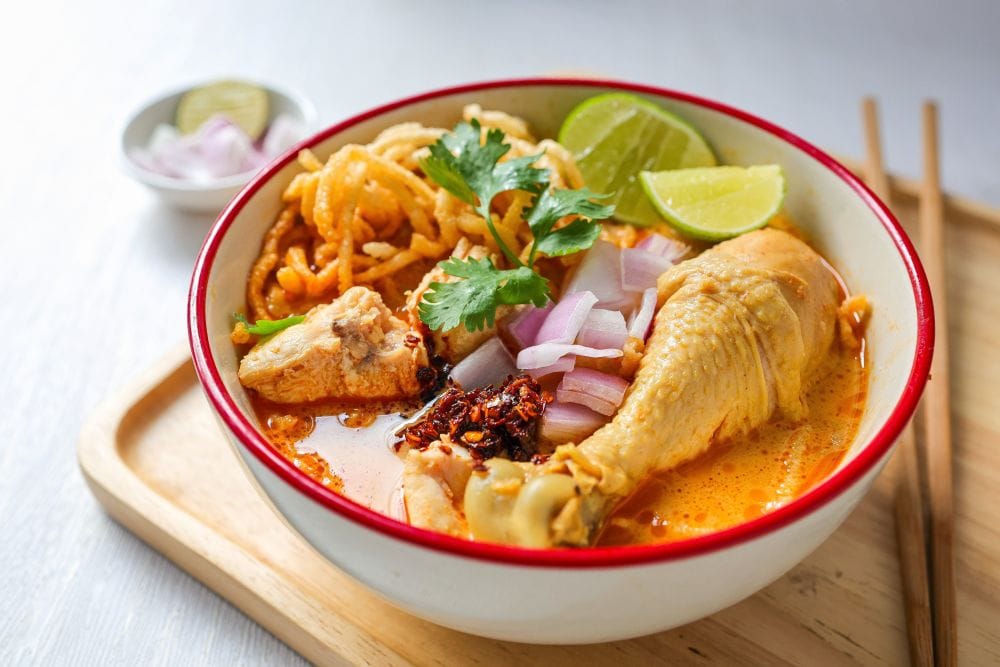
Chicken khao soi is a distinctive Northern Thai dish known for its fragrant coconut curry, egg noodles, and flavorful accompaniments. The key to learning how to make khao soi successfully lies in pounding the curry paste until aromatic, simmering the coconut milk until the oil separates properly, choosing bone-in chicken for natural sweetness, and preparing the noodles with both soft and crispy textures. With a clear understanding of how to cook khao soi, you can create an authentic chicken khao soi recipe at home that is rich, balanced, and beautifully satisfying.
In the world of Thai cuisine, countless dishes can captivate diners from the very first bite, and khao soi is undoubtedly one of its most legendary creations. The deep aroma of spices from the curry paste blends with the rich creaminess of coconut milk and the tender egg noodles hidden beneath a crown of crispy noodles. Together, these elements create a sophisticated yet beautifully balanced harmony of flavors.
This guide will take you on a journey through Northern Thai cuisine by explaining how to make khao soi using a traditional recipe. From preparing homemade curry paste to selecting the noodles and understanding each stage of how to cook khao soi, every detail is covered. With the right techniques and carefully selected khao soi ingredients, you can create a restaurant-quality bowl at home and transform this beloved local dish into a culinary work of art that is almost impossible to resist.
What Is Khao Soi and Where Does It Come From?
Khao soi is one of the most popular dishes in Northern Thai cuisine. It is believed to have originated from the food culture of Chinese Muslims from Yunnan who migrated into the Lanna region. Over time, the recipe was adapted with local flavors, regional khao soi ingredients, and the distinctive character of Northern Thai cooking, eventually becoming the unique dish enjoyed today.
The defining feature of khao soi is its combination of egg noodles and coconut curry. Unlike many traditional Thai curries, the broth carries the fragrant notes of curry powder, turmeric, coriander seeds, and dried chilies, all blended with the rich creaminess of coconut milk.
When served with crispy noodles, pickled mustard greens, shallots, lime, and chili oil, khao soi delivers richness, saltiness, sweetness, heat, acidity, softness, and crunch in a single bowl. Understanding this balance is an essential part of learning how to make khao soi that tastes authentic.
What Goes into Khao Soi? Essential Khao Soi Ingredients and Accompaniments
Learning how to cook khao soi successfully requires more than making a rich curry broth. It also calls for careful noodle preparation and thoughtful presentation so that every component remains balanced in both flavor and texture.
The right khao soi ingredients work together to create the dish’s signature complexity. Each ingredient contributes a distinct aroma, taste, or texture that makes khao soi different from other coconut curry noodle dishes.
Khao Soi Curry Broth Ingredients
The main khao soi ingredients for the curry broth include:
- Chicken drumsticks or chicken thighs
- Coconut milk
- Khao soi curry paste
- Curry powder
- Fish sauce
- Palm sugar
- A small amount of chicken stock
For a deeply aromatic broth, choose high-quality coconut milk. Coconut milk is one of the most important khao soi ingredients because it brings together the fragrance of the spices and the intensity of the curry paste.
Bone-in chicken is recommended because slow simmering allows the bones and meat to release natural sweetness into the broth. This creates a rounder, richer, and more satisfying flavor. When learning how to make khao soi, allowing enough time for the chicken to simmer is essential for achieving the desired depth.
Khao Soi Noodles and Crispy Noodles
Fresh egg noodles are traditionally used for khao soi because they have a tender yet pleasantly chewy texture, a beautiful golden color, and the ability to pair well with coconut curry.
A traditional recipe usually divides the noodles into two portions. The first portion is boiled until tender, while the second portion is fried until crisp and used as a topping. This combination is central to how to cook khao soi in the classic Northern Thai style.
After boiling the noodles, lightly toss them with oil to prevent them from sticking together. For the crispy noodles, fry them in hot oil over medium to moderately high heat. This helps the noodles expand, become crisp, develop a golden color, and avoid absorbing too much oil.
Choosing the correct noodles is just as important as selecting the other khao soi ingredients, since the contrast between tender and crispy noodles is one of the dish’s most recognizable characteristics.
Essential Khao Soi Accompaniments
The accompaniments add freshness, acidity, heat, and texture to the creamy curry broth. Traditional khao soi ingredients served on the side include:
- Sliced pickled mustard greens
- Sliced shallots
- Lime wedges
- Chili flakes cooked in oil
- Green onions
- Cilantro
- Fried dried chilies
When all these khao soi ingredients are combined, a bowl of khao soi offers the full spectrum of flavors that make Thai cuisine so widely loved.
The lime balances the richness of the coconut milk, while the pickled mustard greens provide acidity and a subtle salty flavor. Shallots add freshness and mild sharpness, and chili oil allows each diner to adjust the heat according to personal preference.
Homemade Khao Soi Curry Paste Recipe
Curry paste is the heart of khao soi because it determines the dish’s aroma, heat, color, and overall character. Preparing the paste at home allows you to control the balance of spices and adjust the level of heat according to your preferences.
Homemade curry paste can also give the broth a fresher and more harmonious taste than many packaged alternatives. Anyone learning how to make khao soi should consider preparing the curry paste from scratch at least once to experience the full aroma of the traditional khao soi ingredients.
Ingredients for Homemade Khao Soi Curry Paste
For a traditional flavor, prepare the following khao soi ingredients for the curry paste:
- Large dried chilies, soaked in water
- Shallots
- Garlic
- Ginger
- Turmeric
- Lemongrass
- Toasted coriander seeds
- Curry powder
- Salt
- A small amount of shrimp paste
How to Pound Khao Soi Curry Paste Step by Step
- Begin by dry-toasting the coriander seeds until fragrant, then pound them into a fine powder using a mortar and pestle.
- Add the dried chilies, salt, lemongrass, ginger, turmeric, shallots, and garlic. Continue pounding until all the khao soi ingredients form a smooth and uniform paste.
- Add the shrimp paste and curry powder, then pound again until fully combined. The smoother the paste becomes, the more evenly its flavors will blend into the broth.
- A finely pounded curry paste produces a more aromatic and balanced result without leaving large pieces of herbs in the finished dish.
- A food processor can be used for convenience, but a mortar and pestle generally produce a more integrated texture by crushing the fibers and releasing the natural oils of the herbs and spices.
How to Adjust the Heat and Aroma of the Curry Paste
For a spicier curry paste, add a small amount of dried bird’s eye chili or smaller dried chilies. For a warmer and more fragrant aroma, slightly increase the curry powder or toasted coriander seeds.
However, spices should be used in moderation. Too much curry powder or coriander can overpower the natural sweetness of the coconut milk and chicken.
When deciding how to make khao soi for different diners, adjust the chili level gradually. It is easier to add heat later with chili oil than to reduce the heat after the curry has been cooked.
How to Make Khao Soi with Chicken: A Basic Recipe for Beginners
For beginners who want to prepare chicken khao soi at home, the following method explains how to make khao soi in clear and manageable stages. It covers simmering the aromatic curry, preparing the noodles, and arranging the finished bowl for an appealing presentation.
Before beginning, measure and prepare all the khao soi ingredients. Having everything ready will make the cooking process smoother and help prevent the coconut milk or curry paste from burning.
How to Simmer the Khao Soi Curry Broth
- Place a pot over medium heat and add the thick coconut cream. Simmer until the natural coconut oil begins to separate.
- Add the khao soi curry paste and cook until fragrant.
- Add the chicken drumsticks and cook until the surface of the chicken begins to firm slightly.
- Pour in the remaining coconut milk or chicken stock.
- Reduce the heat and gently simmer until the chicken becomes tender.
- Season the curry with fish sauce and palm sugar.
How to Boil and Fry Khao Soi Noodles
- Bring a pot of water to a full boil. Add the fresh egg noodles and cook briefly until they are tender. Avoid overcooking them, since they will soften further once the hot curry is poured into the bowl.
- Drain the noodles thoroughly and toss them with a very light coating of oil to prevent them from sticking together.
- For the crispy noodles, gently separate the strands before placing them in the hot oil. Fry until they expand, become crisp, and develop an even golden color. Transfer them to a plate lined with absorbent paper.
- The boiled noodles should remain tender and chewy, while the fried noodles should be light and crisp rather than dense or oily.
How to Assemble and Serve Khao Soi Like a Restaurant
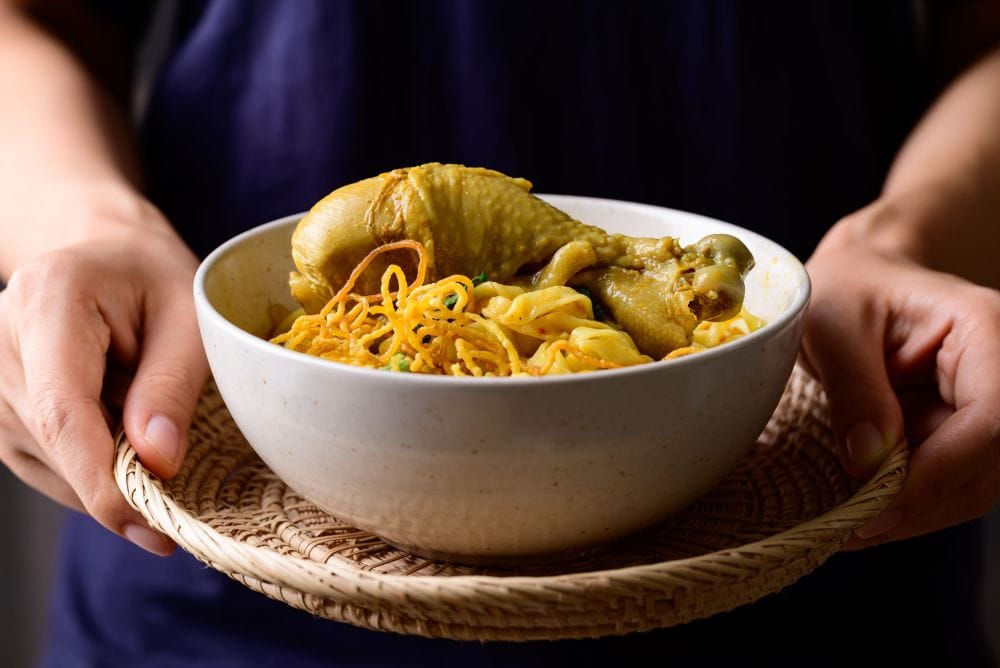
- Gently place the boiled noodles in a serving bowl. Set a chicken drumstick on top, then ladle in enough curry broth to surround the noodles without completely hiding them.
- Finish the bowl with crispy noodles, sliced green onions, and cilantro. Serve the remaining khao soi ingredients, including pickled mustard greens, shallots, lime, and chili oil, in small dishes on the side.
- Keeping the accompaniments separate allows each diner to adjust the acidity, freshness, saltiness, and heat according to personal preference. It also helps the crispy noodles maintain their texture until the bowl is ready to be eaten.
- For a refined presentation, place the crispy noodles loosely on top to create height. Arrange the herbs neatly and wipe the rim of the bowl before serving.
Khao Soi Chicken: A Traditional Dish That Reflects the Depth of Thai Cuisine
A closer look at every element reveals that khao soi is a culinary work of art shaped by many carefully executed details. These include pounding the curry paste until deeply aromatic, simmering the coconut milk at the right temperature, and choosing noodles that provide both tenderness and crispness in the same bowl.
Once you fully understand how to make khao soi, you can create a flavorful version in your own kitchen whenever the craving arises. The process of learning how to cook khao soi is not simply about following a recipe. It is about understanding how the khao soi ingredients interact to create richness, fragrance, acidity, heat, and contrasting textures.
For diners who would like to experience a fine dining course in Bangkok, R-HAAN offers an elegant expression of the beauty of traditional Thai dining. Recognized with two Michelin stars, R-HAAN presents every dish with precision, refinement, and respect for Thailand’s culinary heritage.
The restaurant carefully selects premium Thai ingredients and transforms them into remarkable creations that unfold like poetry through flavor. Each menu reflects the depth, grace, and enduring charm of Thai cuisine.
Reserve your table today through the website or call 095-141-5524
References:
- Khao Soi. Retrieved on 2 July 2026 from https://thailandknowledge.com/food-and-drink/khao-soi.
- Chiang Mai Curry Noodles with Chicken (Khao Soi). Retrieved on 2 July 2026 from https://www.templeofthai.com/recipes/khao-soi.php.
Frequently Asked Questions About How to Make Khao Soi (FAQs)
Q: How can I fix khao soi curry that has separated or looks too oily?
A: If the khao soi curry has separated or has too much oil floating on the surface, the coconut milk may have been cooked over excessively high heat or simmered for too long.
Reduce the heat to low and add a small amount of thin coconut milk or chicken stock. Stir gently until the broth becomes smoother. Avoid stirring too vigorously, as this may cause the chicken to break apart or damage the texture of the noodles.
Some oil separation is natural, especially when the curry paste is cooked in coconut cream. The goal is not to remove all the oil, but to create a broth that looks rich and balanced rather than greasy.
Q: What noodles are used in khao soi?
A: Traditional khao soi is made with fresh Chinese-style egg noodles, which have a soft, chewy texture and a naturally golden color. The noodles are usually divided into two portions. One portion is boiled and placed in the curry broth, while the other is deep-fried until crisp and used as a topping.
Fresh egg noodles are the best choice when learning how to make khao soi because they hold their shape well and absorb the rich coconut curry without becoming too soft. If they are unavailable, yellow wheat noodles or fresh ramen noodles can be used as substitutes, although the texture may differ slightly from authentic khao soi.
Q: Where can I buy khao soi noodles, and can I make them at home?
A: Khao soi noodles are often available at supermarkets, fresh markets, stores specializing in Northern Thai khao soi ingredients, and online retailers. Fresh egg noodles or packaged khao soi noodles are the most common options.
You can also make the noodles at home using wheat flour, eggs, water, and salt. Knead the dough until smooth, roll it into thin sheets, and cut it into strands. The noodles can then be boiled or fried according to the recipe.
Homemade noodles provide control over thickness and texture, making them an excellent option for anyone exploring how to make khao soi from scratch.
Q: Can I use another type of noodle if egg noodles are unavailable?
A: If fresh egg noodles are unavailable, yellow wheat noodles, ramen noodles, or another type of fresh, chewy noodle can be used. However, the texture may differ slightly from traditional khao soi.
For the closest result, choose noodles that do not become mushy easily and can absorb the curry broth without losing their structure. The noodles should remain tender yet firm enough to support the rich sauce and other khao soi ingredients.