Key Takeaways
Thai local spirits and Thai liquor are valuable products reflecting the profound local wisdom of each region. Crafting these beverages involves meticulous care using natural ingredients, whether it is the sweet aroma of Sato or the profound smoothness of Thai whiskey. Each spirit possesses a unique character that, when paired with exquisite Thai cuisine, brilliantly elevates the flavors of the ingredients. Choosing the right beverage for a Thai Samrub (set meal) creates a harmonious and unforgettable sensory experience for every dining occasion.
The exquisite flavors of Thai cuisine often come with a beautiful complexity of spices and herbs. However, the dining experience is sometimes incomplete without a beverage that can truly harmonize and highlight the dish’s distinctiveness. Many gourmets seek imported drinks, perhaps forgetting that the Thai terroir has nurtured exceptional local spirits born from the exact same roots, water sources, and ingredients as the food on the plate. Savoring the drops of wisdom found in local Thai liquor is like opening the door to a truly harmonious symphony of taste, aroma, and touch.
What is community liquor and how does it differ from factory liquor?
Community liquor or local craft spirits are products of meticulous craftsmanship passed down through time. The most distinctive difference compared to factory liquor is the “soul of the ingredients.” To clearly picture this difference, consider the following comparison table:
| Features | Community Liquor (Craft Spirit) | Factory Liquor (Mass Production) |
| Production Process | Traditional fermentation and distillation, relying heavily on the maker’s touch and expertise. | Mass-produced by machines, emphasizing strict and consistent standards. |
| Ingredients and Yeast | Uses local yeast balls (Look Pang) or natural yeast grown in each area, combined with local water sources. | Uses industrial yeast and ingredients to achieve a uniform, identical result. |
| Taste and Aroma | Unique characteristics that evolve with the seasons and weather. | Predictable taste, consistent in every single bottle. |
| Charm and Highlights | Carries the authentic essence of the locale; remarkably smooth and complex. | Easy to purchase, answering general consumption needs. |
Every drop of community Thai liquor is full of unique identity, aroma, and a smoothness that varies organically by season, beautifully reflecting the abundance of its land of origin.
Tracing the wisdom: What are the local liquors of Thailand’s 4 regions?
Thailand’s natural abundance means each region cultivates different agricultural products, resulting in a fascinating and unique fermented beverage culture.
- Northern Region: Prominent for “Sato” and “Lao Tom” (distilled liquor), made from fermented premium sticky rice. They carry the gentle aroma of rice and cold-climate herbs, delivering a soft, mellow touch.
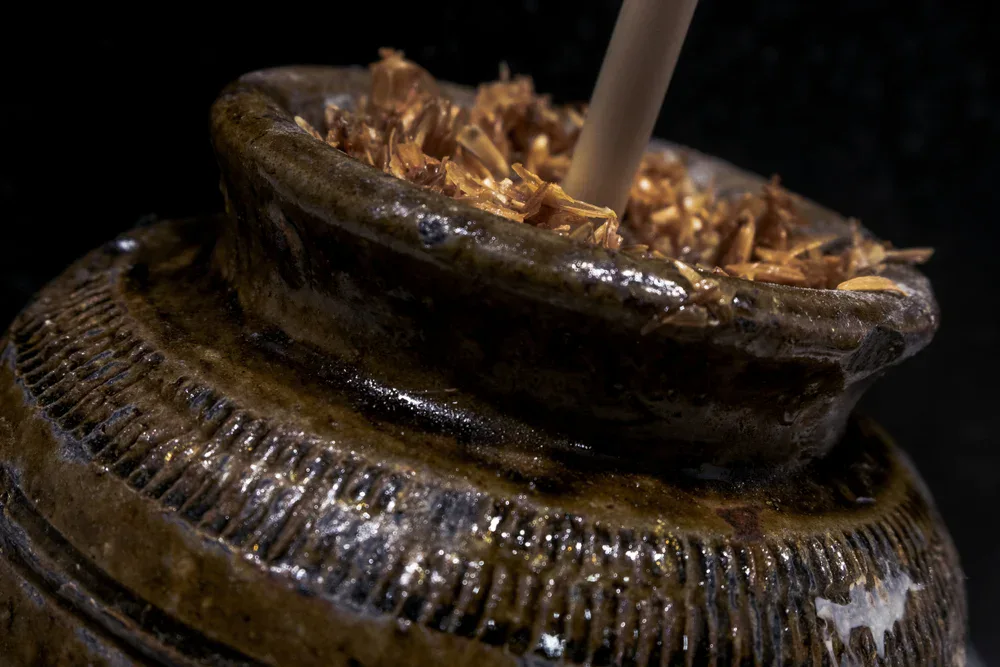
- Northeastern Region (Isan): The birthplace of “Ou” (rice wine) and white liquor fermented from sticky rice in earthenware jars. These offer a bold, honest flavor with a distinct, earthy essence.
- Central Region: Famous for “Namtan Mao” or “Krachae” derived from palm or coconut sugar, providing a sweet, fragrant, and mellow taste. It is also known for white liquor distilled from rice, representing the region’s agricultural heartland.
- Southern Region: Renowned for “Waak,” a southern palm wine fermented from palm sugar. It offers a sweet-and-sour taste with a slight, surprisingly refreshing fizziness.
Delving into the Charm of Sato and Thai Whiskey
To truly understand the charm of Thai spirits, one must get to know the shining stars of the local beverage scene, which boast incredibly distinct flavor identities.
What is Sato and how should it be enjoyed?
What is Sato? In essence, Sato is a traditional Thai rice wine made by steaming glutinous rice, mixing it with yeast balls (Look Pang), and leaving it to ferment until the starches convert into sugar and alcohol. The charm of Sato is its sweet and sour taste, accompanied by a light, effervescent tingle at the tip of the tongue.
The best way to enjoy it is ice-cold, which brings out its refreshing qualities and reduces the sharpness of the alcohol, allowing you to fully appreciate the sweet, earthy aroma of fermented rice.
What is the identity and taste of Thai whiskey?
Thai whiskey is born from the fermentation and distillation of premium local agricultural ingredients, especially various rice strains grown on fertile, rich soil. It offers a velvety smooth touch that does not burn the throat, carrying a complex dimension of aromas that differs based on the main ingredients. For instance, selecting fragrant jasmine rice as the base elevates the spirit with hints of delicate florals and subtle vanilla notes intertwined with a graceful sweetness. It is a flavor profile that reflects pure refinement, possessing a quality fully on par with international spirits.
The art of food pairing: What food or snacks should Thai liquor be paired with?
The joy of dining is discovering the perfect harmony of flavors. Pairing local spirits with a traditional Thai Samrub can be done flawlessly by following these pairing guidelines:
| Food Type | Recommended Local Beverage | Aesthetic Experience Received |
| Spicy dishes and herbal salads | Ice-cold Sato | The sweet-and-sour taste and gentle fizziness will cleanse the palate, quench the chili heat, and beautifully enhance the freshness of the herbs. |
| Rich coconut curries or grilled meats | Thai whiskey or rice-distilled liquor | The profound smoothness and aroma of roasted rice will cut through the richness of the coconut milk and elevate the meat’s savory texture. |
| Appetizers and snacks (Miang Kham, fish cakes) | Krachae or Waak | The sweet and fragrant taste of palm sugar pairs exquisitely with snacks containing roasted coconut and light, earthy spices. |
Experience the aesthetic of food and beverage at R-HAAN
The art of flavor pairing between exquisite food and beverages unlocks a dining experience that reaches absolute perfection. When the meticulousness of Thai cuisine meets beverages drawn from local wisdom, the resulting sensory experience is truly unforgettable.
If you are passionate about refinement and the true aesthetics of dining, we invite you to experience an extraordinary level of gastronomy at R-HAAN, a prestigious Michelin restaurant in Thailand holding two Michelin Stars. Here, every menu is meticulously crafted from the finest ingredients nationwide, served in an atmosphere that reflects the breathtaking beauty of Thai art.
Reserve your table today to unlock a fine dining experience that narrates the story of the land through sight, taste, smell, and sound.
ข้อมูลอ้างอิง
- “สังเวียน” สุราพื้นบ้านไทยที่ไม่แพ้ชาติใดในโลก. Retrieved October 27, 2026, from https://www.sanook.com/men/84521/
- เหล้าพื้นบ้าน ภูมิปัญญาไทย. Retrieved October 27, 2026, from https://www.silpa-mag.com/history/article_6123
- เล่าเรื่องเหล้า กับวัฒนธรรมเมรัย. Retrieved October 27, 2026, from https://ngthai.com/cultures/21687/thaicultureofalcohol/
- ต้นตำรับ “เหล้าไทย” ที่มาและกรรมวิธีการผลิต. Retrieved October 27, 2026, from https://www.wongnai.com/food-tips/thai-local-liquor
Frequently Asked Questions about Thai liquor from 4 regions (FAQs)
Q: Is there a difference in the shelf life of Thai fermented and distilled liquors?
A: There is a clear difference. Fermented liquors like Nam Khao or Ou usually have a shorter shelf life and should be kept in the refrigerator to stop the yeast from continuing to ferment, preventing the drink from becoming overly sour. Meanwhile, distilled liquors with higher alcohol content can be kept for many years at room temperature without spoiling the taste.
Q: Are the yeast balls (Look Pang), the core of liquor fermentation, made with the same ingredients in every area?
A: The yeast balls in each area are not the same, as they are often closely guarded secret recipes passed down within families or communities. They frequently incorporate local herbs such as long pepper, black pepper, garlic, or various roots. These unique herbs dictate the distinct aromas and flavors of the resulting liquor in each region.
Q: What type of glass should be used to serve Thai liquor to best enhance the flavor?
A: For fermented drinks with the delicate aroma of rice and herbs, using a tulip glass or white wine glass helps capture the aroma at the rim, allowing the drinker to clearly and deeply experience the complex scents before tasting.
Q: What does Thai whiskey made from jasmine rice taste like?
A: Thai whiskey distilled from jasmine rice provides a velvety smooth touch that does not burn the throat. It is characterized by delicate floral and soft vanilla notes hidden within the natural, sweet mellowness of the rice, creating a unique identity distinct from whiskeys made from malt or corn.
Q: What is Thai liquor made from?
A: Thai liquor is made from local agricultural ingredients that vary by region. Sato, for example, is made by fermenting steamed glutinous rice with yeast balls (Look Pang), while Ou is fermented from sticky rice in earthenware jars. Namtan Mao (Krachae) and Waak are fermented from palm or coconut sugar, and Thai whiskey is distilled from local rice.
Q: What do Thai people eat with local spirits?
A: Local spirits are best matched with the dishes of a traditional Thai Samrub (set meal). Ice-cold Sato suits spicy dishes and herbal salads, Thai whiskey or rice-distilled liquor pairs with rich coconut curries and grilled meats, and Krachae or Waak goes well with snacks such as Miang Kham and fish cakes.