Key Takeaways
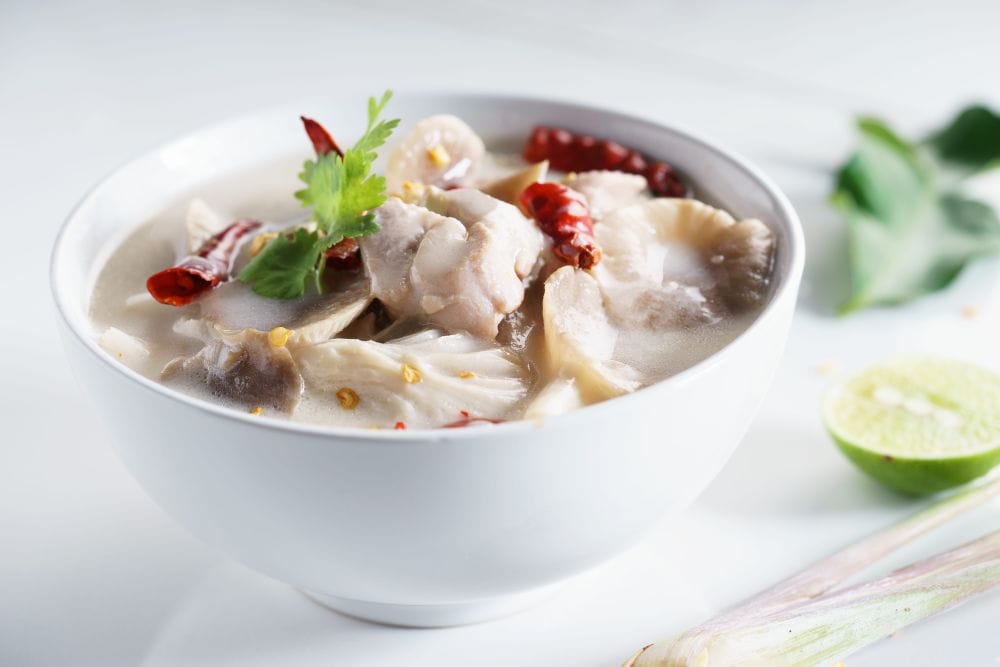
Tom kha gai is a refined expression of Thai culinary artistry, combining the smooth richness of coconut milk, the gentle heat of galangal, and the fragrant aroma of traditional herbs such as lemongrass and makrut lime leaves. The result is a creamy, comforting soup with a balanced flavor and a light, soothing quality.
Beyond its distinctive taste, tom kha gai also provides nutritional value from protein-rich chicken and herbs traditionally associated with digestive comfort. The dish reflects the wisdom of Thai cooking, where every ingredient is carefully balanced. The key to a successful tom kha gai recipe is using gentle heat to keep the coconut milk smooth, creating a timeless dish that represents both memorable flavor and the unique identity of Thai food culture.
Among the many Thai dishes celebrated for their vibrant flavors and the distinctive character of local herbs, one stands out as a refined expression of Thai culinary artistry: Tom kha gai. This coconut milk and herb soup is delicate, complex, and comforting all at once. With the first spoonful, the aroma of galangal rises gently through the steam, followed by the freshness of lemongrass and makrut lime leaves and the bright acidity of lime juice. The experience finishes with the smooth, subtly sweet richness of coconut milk, which brings every element together in perfect harmony.
The sophistication of tom kha gai lies not only in its flavor but also in the culinary wisdom behind it. The dish reflects the Thai understanding of how each ingredient behaves and how different flavors can be balanced with precision. It is therefore no surprise that tom kha gai has long appeared on Thai dining tables, from everyday family meals to elaborate royal cuisine. Today, it is recognized as one of the most celebrated dishes in Thai food culture.
This article explores how a traditional tom kha gai recipe can be interpreted through the perspective of contemporary Thai cuisine, transforming a simple bowl of soup into an elegant, comforting, and memorable dining experience.
Why Is Tom Kha Gai One of Thailand’s Most Popular Coconut Milk Soups?
Tom kha gai is unlike an ordinary soup. In addition to providing warmth and comfort, it carries the character of traditional Thai cuisine, revealing its flavors gradually with every spoonful. The dish is believed to have roots in Thai royal cuisine and the culinary traditions of Central Thailand, where coconut milk was commonly used to create a smooth texture, and fresh herbs were added to develop layers of flavor and aroma.
At the heart of every authentic tom kha gai recipe is galangal. This essential ingredient gives the soup its unmistakable identity. Galangal provides a gentle heat and a fresh, slightly peppery aroma that differs from both ginger and lemongrass. When simmered with coconut milk, lemongrass, makrut lime leaves, and shallots, it creates a pale, creamy broth that may appear simple but contains remarkable depth.
Many people wonder about what is tom kha gai and how is it different from tom yum. The defining quality of tom kha gai is its smooth, rounded flavor. It is not as intensely spicy or sharply sour as tom yam, but it is never bland. Lime juice or tamarind water balances the richness of the coconut milk, while fish sauce adds savory depth. Lightly crushed Thai chili peppers provide gentle heat without overpowering the creamy coconut base.
When comparing tom kha gai vs tom yam, coconut milk is one of the most noticeable differences. Traditional tom yam usually has a clear or lightly creamy broth with a sharper balance of sourness and heat. Tom kha gai, by contrast, has a richer body and a softer flavor profile shaped by coconut milk and galangal. Understanding tom kha gai vs tom yam makes it easier to appreciate the distinct character of both dishes.
Nutritional Value of Tom Kha Gai
In addition to its refined flavor, tom kha gai offers nutritional value from a variety of ingredients, particularly chicken, coconut milk, and Thai herbs. Each of these tom kha gai ingredients plays a different role in creating a satisfying and balanced meal.
Protein from Chicken
Chicken is a high-quality source of protein that supports the growth and repair of body tissues. Chicken thighs are an excellent choice for a tom kha gai recipe because they remain tender and juicy and pair well with the creamy coconut broth.
Chicken breast is suitable for those who prefer a leaner option, while chicken drumsticks provide a hearty texture and make tom kha gai especially suitable for family-style dining. The choice of chicken can be adjusted according to personal preference without changing the essential identity of the dish.
Fats from Coconut Milk in Appropriate Portions
Coconut milk is one of the most important tom kha gai ingredients, giving the soup its smooth, rich texture. Although coconut milk contains fat, it can provide energy when consumed in appropriate portions and contributes to the distinctive mouthfeel of tom kha gai.
The key is to avoid making the broth excessively heavy. In a well-balanced tom kha gai recipe, coconut milk should support the flavors of the herbs and chicken rather than overwhelm them. The result should be creamy and satisfying while still allowing the freshness of the galangal, lemongrass, and lime leaves to remain noticeable.
Thai Herbs That Support Digestion
Thai herbs such as galangal, lemongrass, makrut lime leaves, and shallots distinguish tom kha gai from a standard coconut milk soup. These tom kha gai ingredients are traditionally used to reduce the sensation of richness, stimulate the appetite, and create a refreshing aroma.
Galangal and lemongrass provide a mild warming sensation that makes the soup feel comforting and easy to enjoy. Together, the herbs create an aromatic balance that is essential to an authentic tom kha gai recipe.
What Goes into Tom Kha Gai? A Complete Ingredient List with Measurements
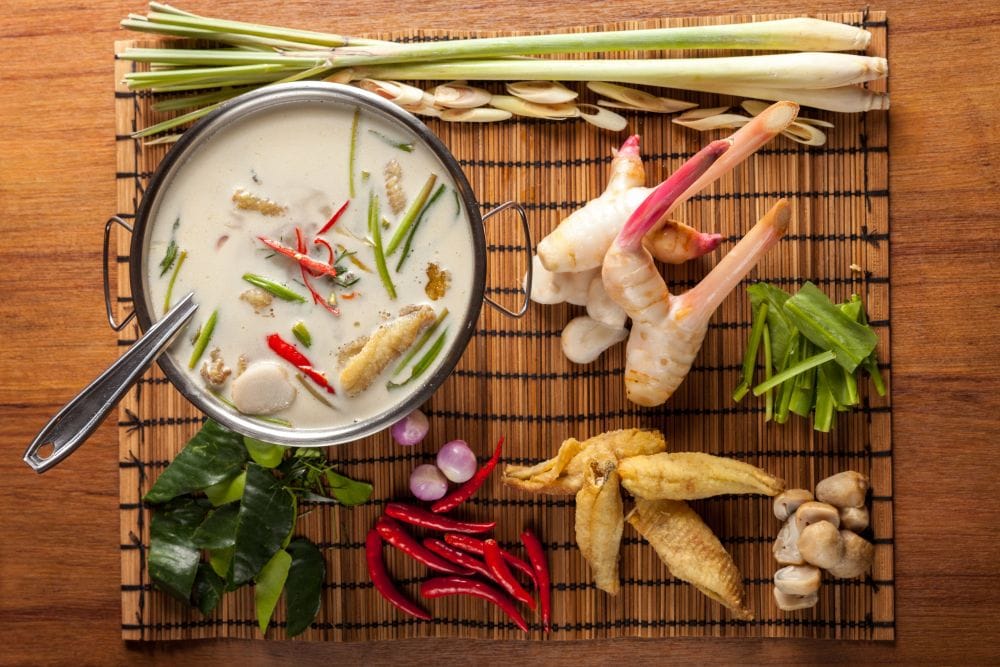
Before learning how to prepare the soup, it is important to understand the essential tom kha gai ingredients used in a traditional recipe. The key is to select the right ingredients and measure them carefully so that the final flavor is smooth and balanced, without becoming too rich, sharply sour, or excessively spicy.
The following tom kha gai ingredients make approximately 3-4 servings:
- 14 to 18 ounces of chicken: Use chicken thighs, chicken breast, or drumsticks according to preference. It is not necessary to use every cut in the same pot. Chicken thighs are recommended for a tender and juicy texture because their light marbling pairs especially well with coconut milk broth.
- 1 cup thick coconut milk: Add this toward the end of the cooking process to create a richer, smoother texture.
- 2 cups diluted coconut milk: Use this as the soup base for simmering the herbs and chicken.
- 8 to 10 slices of galangal: Choose young or moderately mature galangal rather than older, fibrous pieces. Younger galangal provides a gentler heat and a more delicate aroma.
- 2 to 3 stalks of lemongrass: Lightly crush the stalks and cut them into sections to release their fresh citrus fragrance.
- 5 to 6 makrut lime leaves: Tear the leaves and remove the central stems so their aroma infuses the broth without becoming too strong.
- 4 to 5 shallots: Lightly crush them to add a natural sweetness to the soup.
- 5 to 8 Thai chili peppers: Lightly crush the peppers and adjust the amount according to the desired level of heat.
- 2 to 3 tablespoons of fish sauce: Use it to add savory depth and a distinctly Thai flavor.
- A small amount of salt: This helps bring the flavors of the broth into sharper focus.
- 3 to 4 tablespoons of lime juice: Tamarind water may be used in a similar quantity for a softer and more traditional style of acidity.
Mushrooms such as straw mushrooms or oyster mushrooms may also be added to this tom kha gai recipe. However, they should be used in moderation so their flavor does not overshadow the principal herbs, particularly galangal, lemongrass, and makrut lime leaves.
The traditional appeal of tom kha gai comes from the balance between coconut milk, chicken, and aromatic Thai herbs. For this reason, the proportions of the tom kha gai ingredients are just as important as the ingredients themselves.
Authentic Tom Kha Gai Recipe Recipe with Galangal
Preparing tom kha gai may sound as though it requires advanced cooking techniques, but the dish is relatively simple when the correct order of ingredients and appropriate heat level are understood.
The most important part of a successful tom kha gai recipe is allowing the herbs to release their aroma gradually while keeping the coconut milk smooth. The broth should not separate or become excessively oily, as this would change the appearance and texture associated with traditional tom kha gai.
Prepare the Ingredients and Chicken Broth
Begin by washing the chicken thoroughly and cutting it into bite-sized pieces. When using chicken thighs, cut the pieces into similar sizes so they cook evenly.
Prepare the remaining tom kha gai ingredients by slicing the galangal, lightly crushing the lemongrass, tearing the makrut lime leaves, and gently crushing the shallots and Thai chili peppers. This preparation helps the herbs release their flavors gradually without making the broth too intense.
For the soup base, begin with diluted coconut milk because it is lighter than thick coconut milk. It is suitable for simmering the herbs and cooking the chicken without making the soup overly rich.
For greater depth, a small amount of chicken broth may be combined with the diluted coconut milk. This gives the tom kha gai recipe a deeper, natural sweetness from the chicken while maintaining the smooth character of the coconut broth.
How to Make Tom Kha Gai Aromatic, Creamy, and Well-Balanced
- Place a pot over medium heat and add the diluted coconut milk.
- Add the galangal, lemongrass, makrut lime leaves, and shallots. Allow the herbs to simmer gently so they gradually release their aromas into the broth.
- Once the broth is hot and the fragrance of the herbs becomes noticeable, add the chicken.
- Cook over medium-low heat until the chicken is fully cooked. Avoid stirring too vigorously, as this may break apart the chicken and make the broth cloudy.
- When the chicken is cooked, add the thick coconut milk to create a smoother and richer texture.
How to Prevent the Coconut Milk from Separating and Season the Soup
One of the most important techniques in a traditional tom kha gai recipe is controlling the heat after the thick coconut milk has been added. Do not use high heat or allow the soup to boil rapidly for an extended period. Excessive heat may cause the coconut milk to separate and prevent the broth from retaining its smooth, pale appearance.
Use medium-low heat and allow the soup to simmer gently. Season it with fish sauce and a small amount of salt. Taste the broth and adjust the seasoning until the flavors are balanced.
Add the lime juice after turning off the heat. Intense heat can make fresh lime juice taste bitter and reduce its fresh aroma. When using tamarind water, it may be added during the seasoning stage because it tolerates heat more effectively and creates a softer, deeper acidity.
Finish the tom kha gai with lightly crushed Thai chili peppers according to the desired level of heat. The finished soup should have a pale, creamy broth with a rich aroma, balanced flavor, and the unmistakable character of traditional Thai cuisine.
Tom Kha Gai: The Elegance of a Thai Coconut Milk Soup Rooted in Traditional Culinary Wisdom
Although tom kha gai is a familiar Thai herb soup served at many family tables, its apparent simplicity contains a remarkable depth of culinary knowledge. Every stage of the preparation reflects the Thai emphasis on balance, from selecting galangal, lemongrass, and makrut lime leaves to controlling the temperature of the coconut milk.
The thoughtful selection of tom kha gai ingredients builds the dish’s distinctive aroma and flavor, while careful heat control creates a broth that is smooth, creamy, and refined. A traditional tom kha gai recipe demonstrates how Thai cooking can achieve complexity through precision rather than excessive seasoning.
The comparison of tom kha gai vs tom yam also illustrates the diversity of Thai soup traditions. Tom yam is known for a more pronounced sour and spicy profile, while tom kha gai presents a softer balance of coconut richness, acidity, fragrance, and gentle heat. Both dishes express different aspects of Thai cuisine, yet tom kha gai is especially admired for its comforting and elegant character.
For diners who would like to experience refined Thai cuisine and are searching for a Bangkok fine dining course that demonstrates exceptional care in ingredient selection, culinary technique, and artistic presentation, reservations are available at R-HAAN.
R-HAAN is a two-Michelin-star Thai restaurant that presents the beauty of traditional Thai cuisine through a contemporary perspective. Every meal is composed like a poem of flavors, inviting guests to explore Thai culinary culture in a way that is deeper, more sophisticated, and more memorable than ever before.
Reserve your table today through the website or call 095-141-5524
References:
- Tom kha gai. Retrieved on 2 July 2026 from https://www.bbcgoodfood.com/recipes/tom-kha-gai.
- Thai Chicken Soup in Coconut Milk (Tom Kha Gai). Retrieved on 2 July 2026 from https://www.templeofthai.com/recipes/chicken_coconut.php.
Frequently Asked Questions About the Tom Kha Gai Recipe (FAQs)
Q: Can I use packaged coconut milk instead of freshly pressed coconut milk for tom kha gai?
A: Yes. Packaged coconut milk can be used in a tom kha gai recipe instead of freshly pressed coconut milk. Choose a product with a balanced consistency and minimal added flavoring.
To achieve a flavor and texture closer to traditional tom kha gai, mix the packaged coconut milk with a small amount of water or chicken broth. This prevents the soup from becoming excessively thick or rich while allowing the other tom kha gai ingredients to remain prominent.
Q: Can tom kha gai be prepared in advance?
A: Tom kha gai can be prepared in advance, but the lime juice and Thai chili peppers should be added shortly before serving. This helps preserve the bright acidity and the fresh aroma of the herbs.
When reheating the soup, use low heat and avoid bringing it to a rapid boil. Gentle reheating protects the smooth texture of the coconut broth and keeps the chicken tender. This technique is particularly important when preparing a tom kha gai recipe ahead of time.
Q: What should tom kha gai be served with?
A: Tom kha gai is traditionally served with hot steamed rice. The rice absorbs the creamy coconut broth and complements its savory, sour, and aromatic flavors. The soup may also be served as the opening course of a Thai meal or paired with more intensely seasoned dishes to create balance across the table.